 support@vinstreakconsulting.ae
 +971 52
279 7715
+971 52
279 7715



Outsourced Accounting vs In-House Accounting in the UAE: Which Is Better for Your Business?
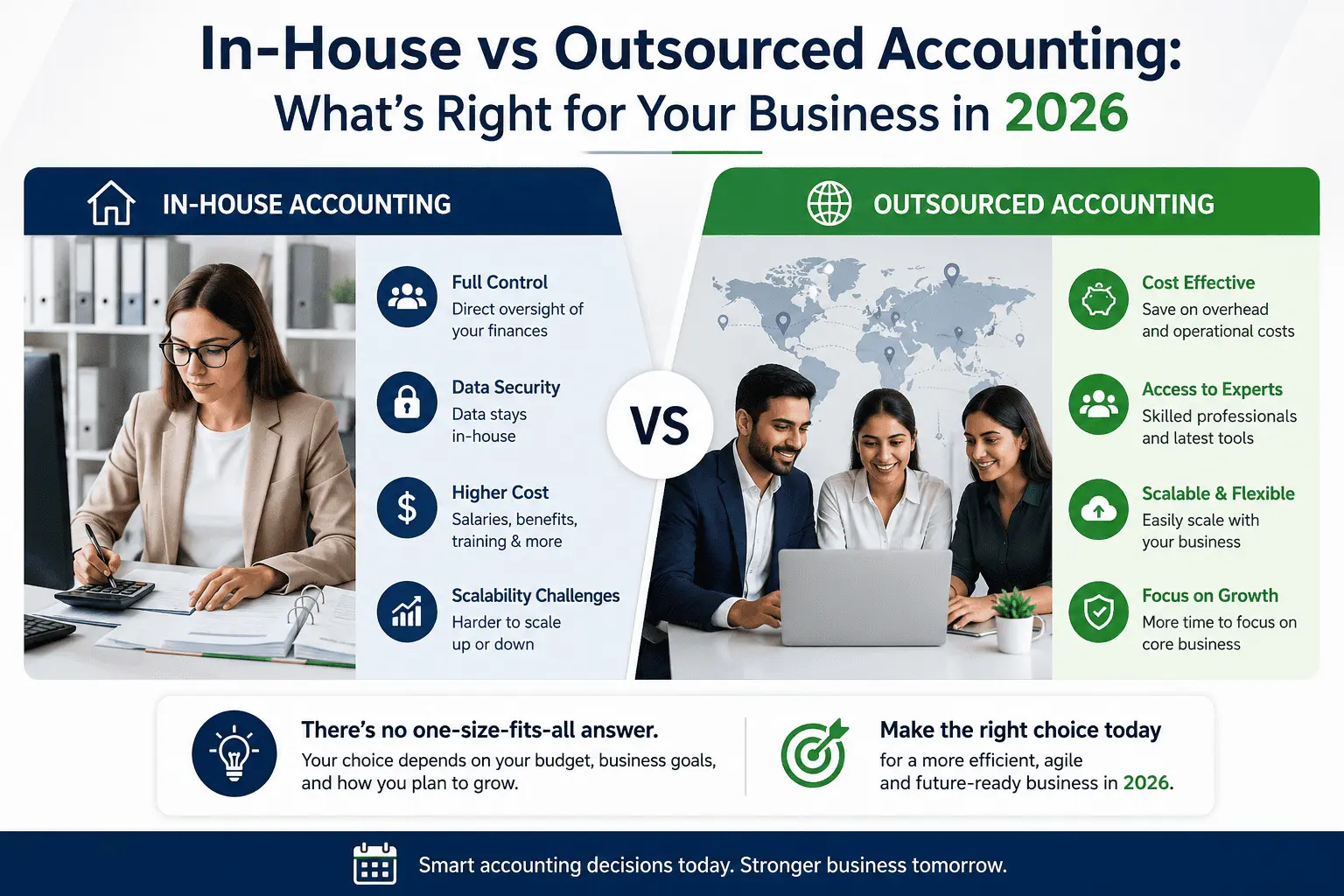
Every UAE business needs reliable financial records, but not every company needs to manage accounting in the same way. Some businesses hire an internal accountant, others outsource accounting and bookkeeping, while many growing companies use a hybrid model.
The correct choice depends on business size, transaction volume, industry, reporting needs, budget, VAT and Corporate Tax obligations, software, data security, management involvement and growth plans.
Need an Outsourced Accounting Team in the UAE?
Get flexible accounting, bookkeeping, bank reconciliation, financial reporting, VAT, Corporate Tax, payroll-related accounting and Virtual CFO support.
What Is Outsourced Accounting?
Outsourced accounting means appointing an external accounting firm to manage some or all finance functions, including bookkeeping, reconciliations, payables, receivables, reporting, VAT accounting, Corporate Tax support, payroll-related accounting, budgeting and Virtual CFO services.
What Is In-House Accounting?
In-house accounting means directly employing one or more finance professionals. The company manages recruitment, onboarding, supervision, training, software, leave coverage, performance and continuity.
Outsourced vs In-House Accounting: Quick Comparison
- Setup: Outsourcing is usually faster; in-house requires recruitment.
- Cost: Outsourcing uses an agreed service fee; in-house includes salary and employment costs.
- Expertise: Outsourcing may provide a wider team; in-house depends on the employee's skills.
- Availability: In-house is generally available daily; outsourcing follows agreed service levels.
- Scalability: Outsourcing can often expand more quickly.
- Continuity: An outsourced team may provide backup; an in-house model can depend on one employee.
Benefits of Outsourced Accounting in the UAE
- Access to bookkeepers, accountants, reviewers, tax professionals and advisers.
- Reduced recruitment, onboarding and leave-coverage administration.
- Easier scalability as transaction volumes grow.
- Team-based continuity and review controls.
- Access to cloud systems, bank feeds and reporting tools.
- Flexible support for startups and SMEs.
Limitations of Outsourced Accounting
- Less immediate on-site availability.
- Dependence on timely document submission.
- Less direct supervision than an employee.
- External-access and confidentiality concerns.
- Quality varies between providers.
Benefits of an In-House Accountant
- Daily availability for management and operational queries.
- Stronger knowledge of customers, suppliers, contracts and internal processes.
- Direct prioritisation and supervision.
- Better fit for high daily transaction volumes.
- Closer coordination with other departments.
Limitations of In-House Accounting
- Higher fixed employment cost.
- Dependence on one employee in smaller businesses.
- Limited skill range across tax, reporting and advisory.
- Recruitment and replacement risk.
- Ongoing training and supervision requirements.
Cost Comparison
Outsourced costs may include monthly fees, VAT and Corporate Tax services, payroll, software, cleanup work, extra reporting, on-site support and Virtual CFO services. In-house costs may include salary, recruitment, visa and onboarding, benefits, workspace, equipment, software, training, leave replacement, supervision and end-of-service obligations.
Control and Visibility
Outsourcing does not mean losing control. The business should retain software access, approval authority, bank control, document ownership, report access, escalation procedures and data-export rights.
Data Security and Confidentiality
Both models require role-based access, multi-factor authentication, secure document sharing, confidentiality agreements, backup procedures, controlled downloads and prompt removal of access when employees or providers leave.
VAT and Corporate Tax Support
Responsibilities should be clear for VAT coding, VAT reconciliations, filing deadlines, deductible-expense reviews, related-party transactions, Corporate Tax return preparation and FTA communication. Explore our VAT Services and Corporate Tax Services.
Which Model Fits Different Business Sizes?
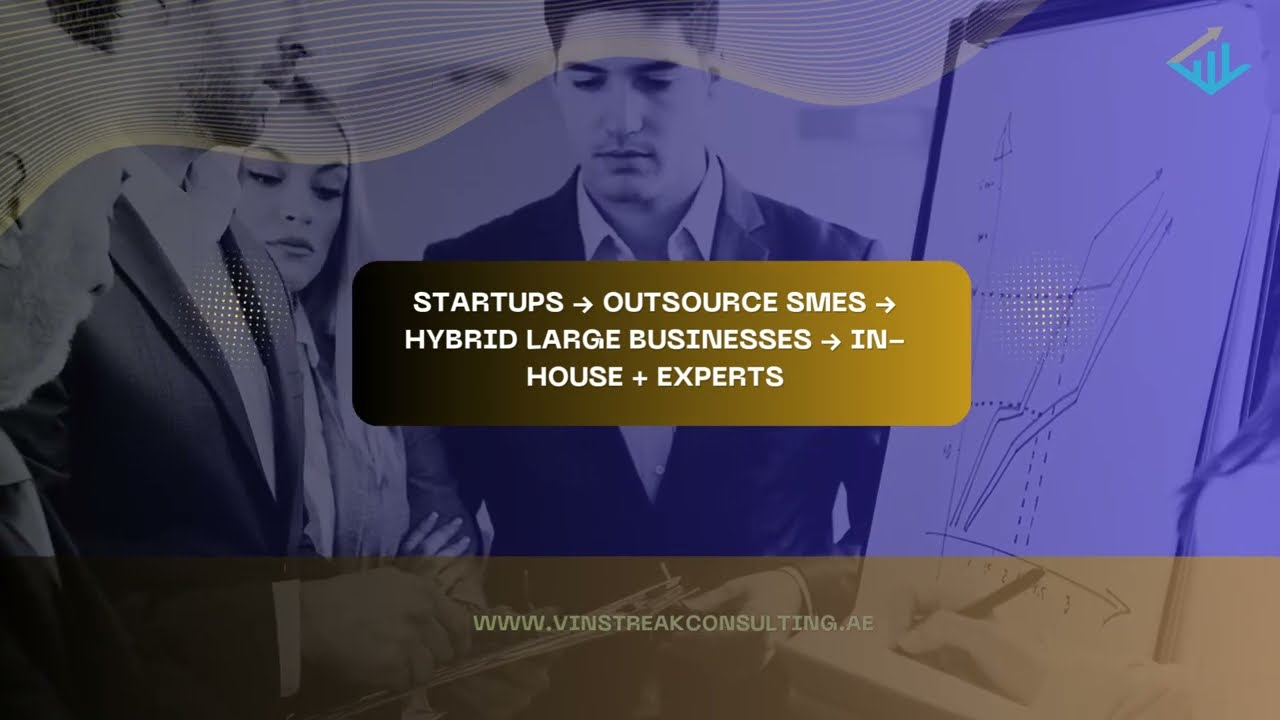
Startups often benefit from outsourcing because they may not need a full-time finance employee. SMEs often benefit from outsourcing or a hybrid approach. Large or complex businesses may need an in-house finance team supported by external tax, audit and advisory specialists.
When a Hybrid Accounting Model Works Best
A hybrid model combines internal document collection, approvals and operational coordination with external reconciliations, reporting, VAT, Corporate Tax, internal-control review and Virtual CFO Services.
Warning Signs Your Current Model Is Not Working
- Bank accounts are not reconciled monthly.
- Reports are consistently delayed.
- Customer and supplier balances are unreliable.
- VAT returns require last-minute corrections.
- Supporting documents are missing.
- Accounting depends entirely on one person.
- Access rights are not controlled.
Questions to Ask Before Deciding
- What services are included?
- How frequently will books be updated and reviewed?
- What reports will management receive?
- What VAT and Corporate Tax support is included?
- How is confidential information protected?
- Who owns and controls the accounting software account?
- What happens during leave, resignation or provider transition?
 18 September
2025
18 September
2025